
Airobot Filters
-
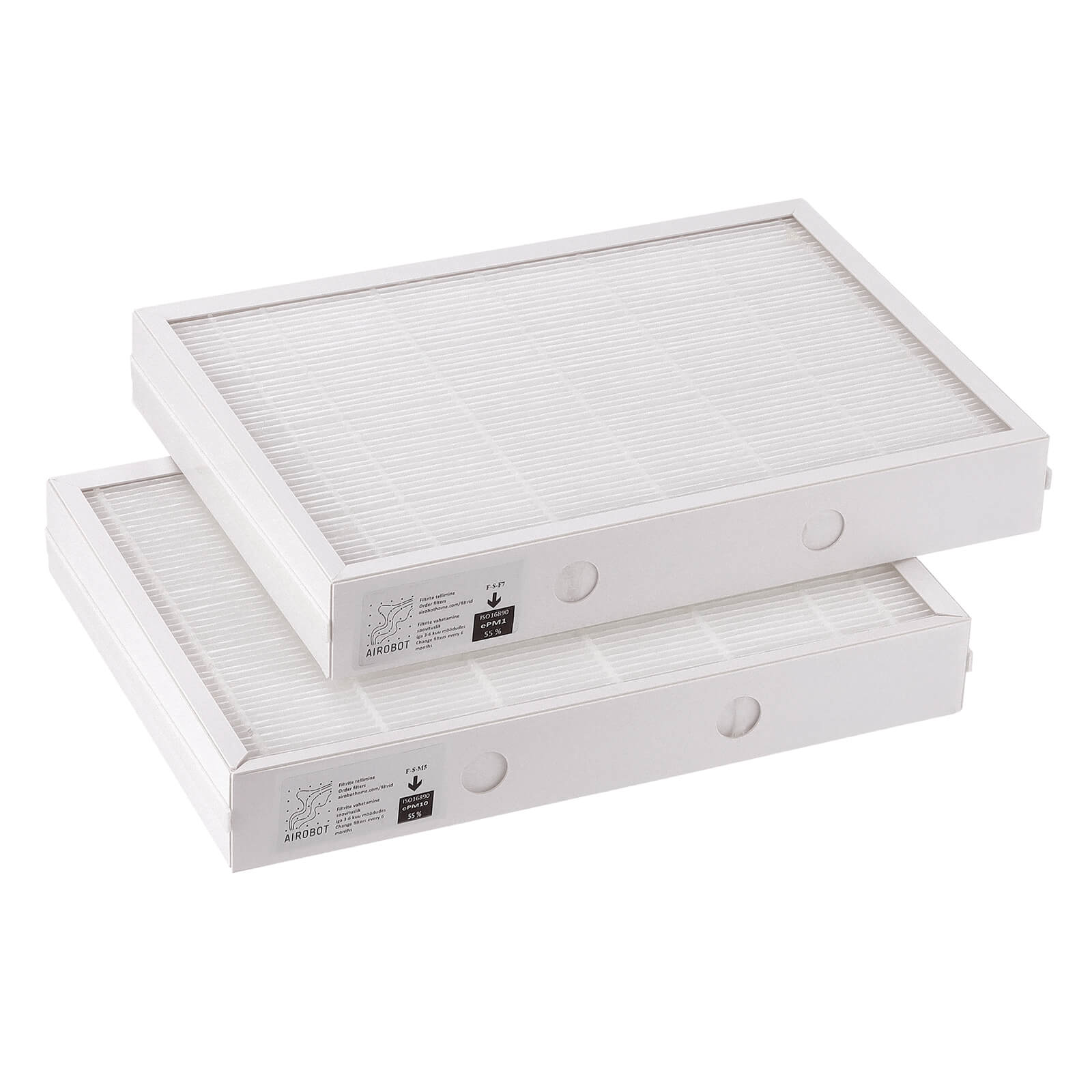 OriginalExtract filter size: 325x230x48 mmSupply filter size: 325x230x48 mmFilter class (EN779): M5+F7Filter quantity in a set: 2 filtersProtection level
Filter protection level indicates efficiency in blocking particles or contaminants, varying by standard and application.
BasicGeneral dust and particle filtration
Pollen and moldCaptures pollen, mold spores, and other allergens
Smog and bacteriaProtects against allergens and urban pollution
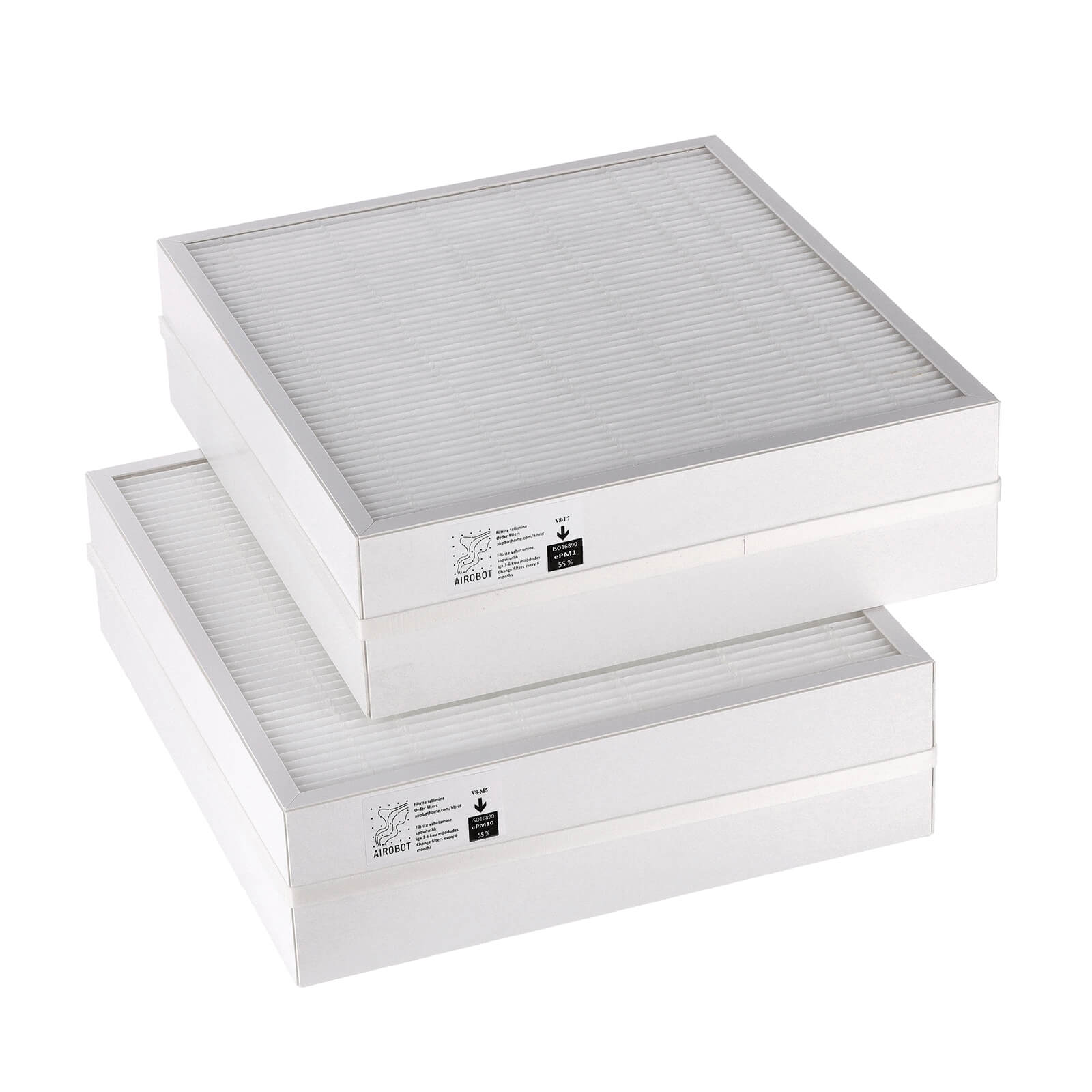 OriginalExtract filter size: 330x300x92 mmSupply filter size: 330x300x92 mmFilter class (EN779): M5+F7Filter quantity in a set: 2 filtersProtection level
Filter protection level indicates efficiency in blocking particles or contaminants, varying by standard and application.
BasicGeneral dust and particle filtration
Pollen and moldCaptures pollen, mold spores, and other allergens
Smog and bacteriaProtects against allergens and urban pollution
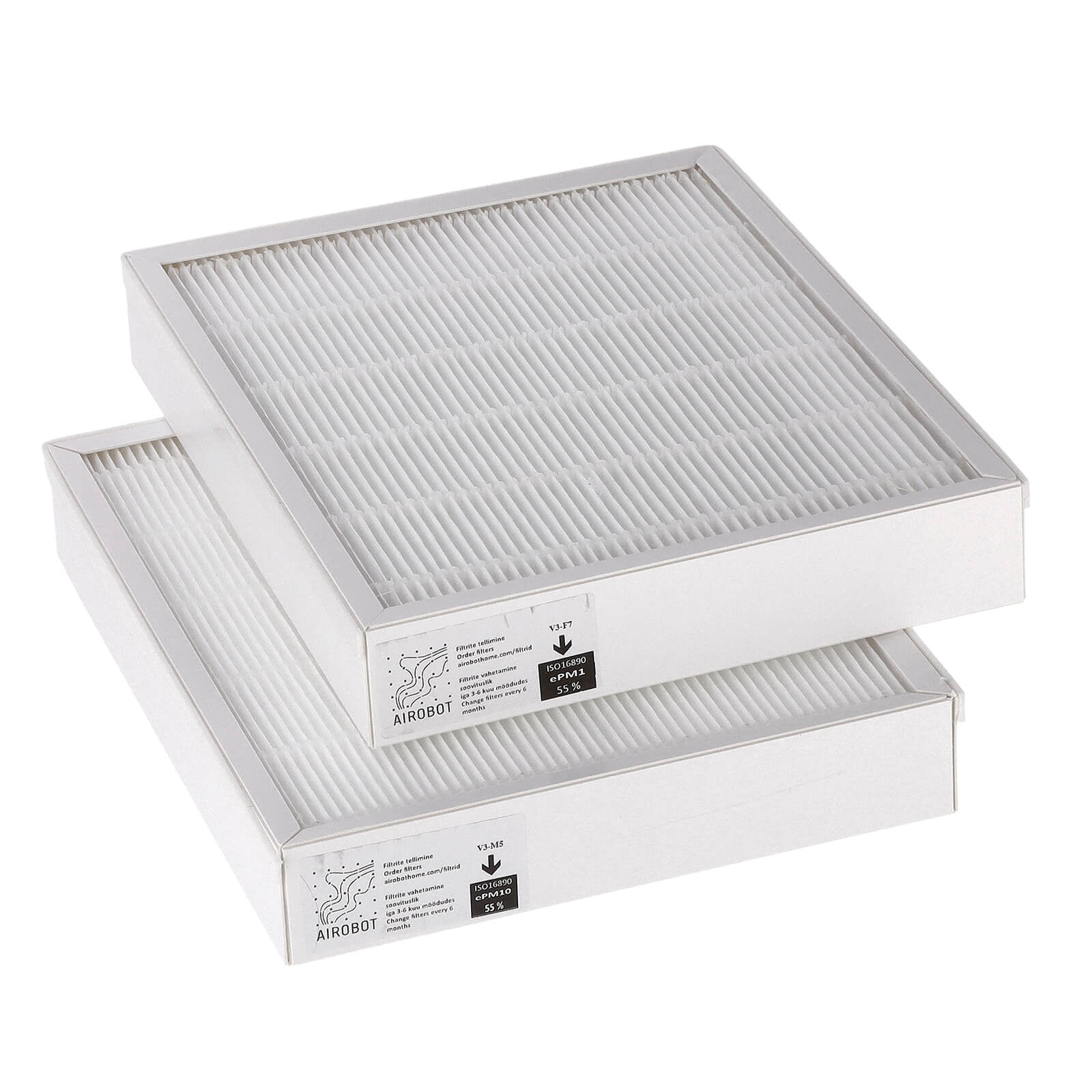 OriginalExtract filter size: 296x231x46 mmSupply filter size: 296x231x46 mmFilter class (EN779): M5+F7Filter quantity in a set: 2 filtersProtection level
Filter protection level indicates efficiency in blocking particles or contaminants, varying by standard and application.
BasicGeneral dust and particle filtration
Pollen and moldCaptures pollen, mold spores, and other allergens
Smog and bacteriaProtects against allergens and urban pollution
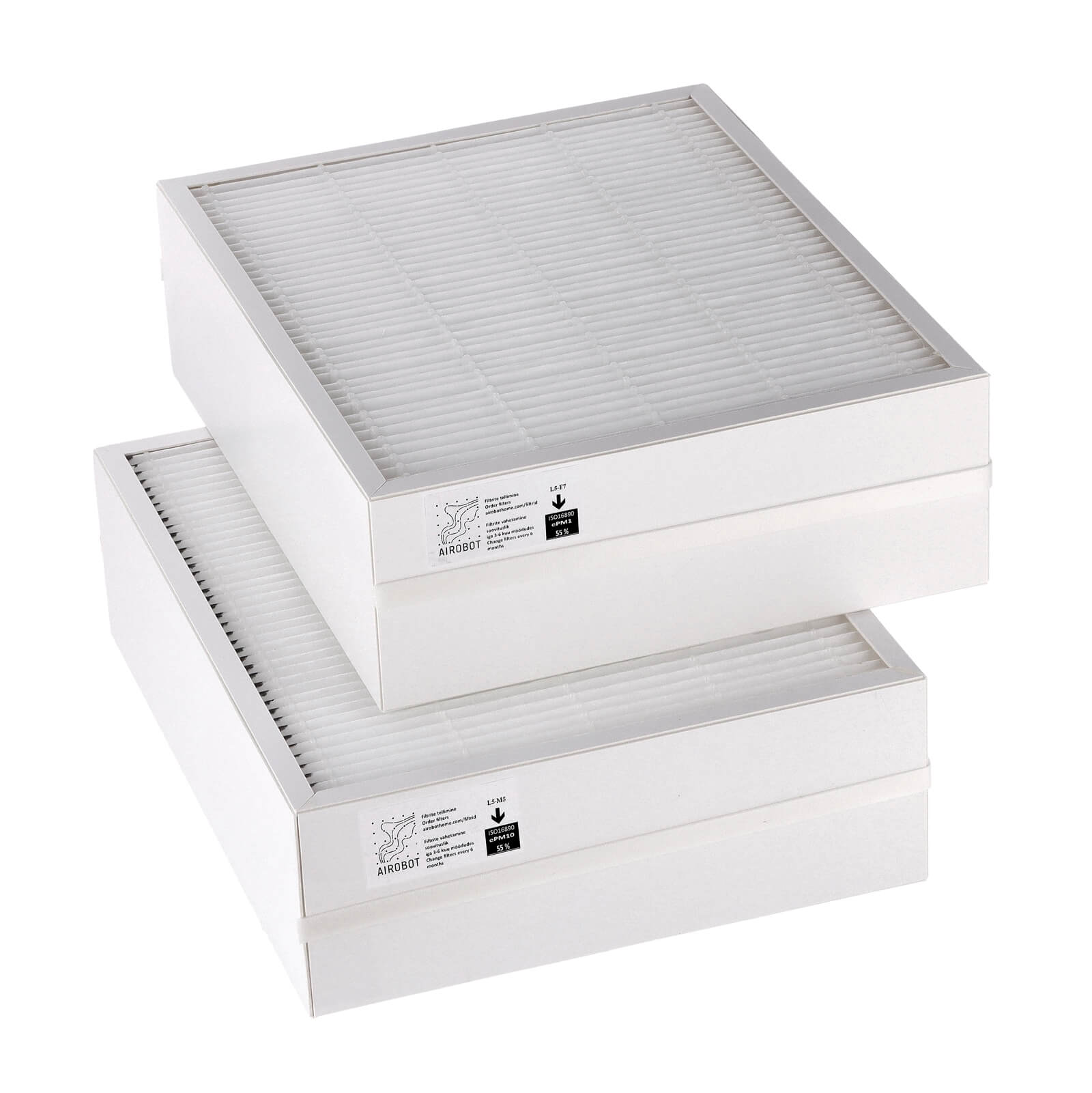 OriginalExtract filter size: 305x248x92 mmSupply filter size: 305x248x92 mmFilter class (EN779): M5+F7Filter quantity in a set: 2 filtersProtection level
Filter protection level indicates efficiency in blocking particles or contaminants, varying by standard and application.
BasicGeneral dust and particle filtration
Pollen and moldCaptures pollen, mold spores, and other allergens
Smog and bacteriaProtects against allergens and urban pollution
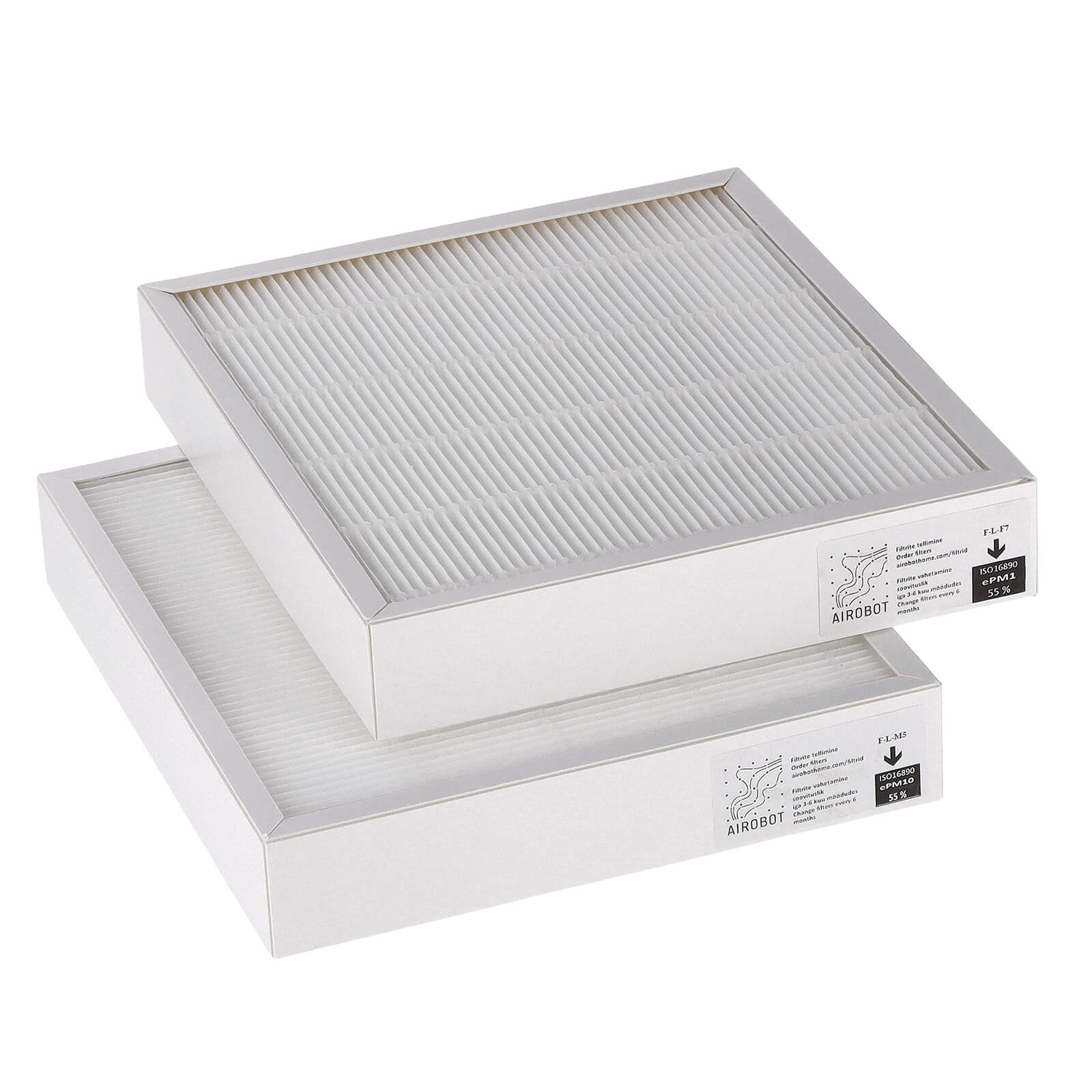 OriginalExtract filter size: 269x236x46 mmSupply filter size: 269x236x46 mmFilter class (EN779): M5+F7Filter quantity in a set: 2 filtersProtection level
Filter protection level indicates efficiency in blocking particles or contaminants, varying by standard and application.
BasicGeneral dust and particle filtration
Pollen and moldCaptures pollen, mold spores, and other allergens
Smog and bacteriaProtects against allergens and urban pollution
1-5 of 5Discover our range of replacement filters for your Airobot ventilation unit, all made in the EU! Our selection includes high-performance filter sets combining M5 (ISO ePM10 55%) and F7 (ISO ePM1 55%) filters, designed to protect your system and improve indoor air quality. Whether you’re looking for original Airobot filters or affordable house brand alternatives, all our options are quality-tested and fully compatible with Airobot MVHR units.
Model compatibility
This category includes filter sets compatible with all major Airobot MVHR ventilation units, including:
- S1 / S2 series
- V3 / V8 series
- L / L5 series
To ensure the right fit, it’s important to know the exact model of your ventilation unit, as different models require different filters. You’ll find helpful tips on identifying your device in the FAQ section.
Filter types and what they protect against
Our replacement filter sets for Airobot units are designed to ensure optimal air quality and system performance by combining two filters with different filtration roles. Each set includes:
- M5 filters (ISO ePM10 55%) on the extract side: ideal for capturing larger particles like pollen, mould spores, pet dander, and house dust.
- F7 filters (ISO ePM1 55%) on the supply side: high-efficiency filters that capture very fine particles, including bacteria, smog, tobacco smoke particles, combustion dust, spores, and wildfire smoke particles.
Usage and maintenance
To keep your MVHR system running efficiently and your indoor air clean, we recommend replacing the filters every 3–6 months. However, this depends on your environment, if you have pets, or nearby construction.
To make the process easy, we provide step-by-step replacement instructions for each filter model. You can find them under the “How to change” tab on every product page.
Manufacturing quality you can trust
The original Airobot filters are manufactured in Estonia in collaboration with the brand’s trusted production partner. Our carefully developed house brand filters are also made in the European Union by certified manufacturers. Both are produced with high-quality materials, under strict ISO 16890 standards to ensure high filtration performance and reliability.
Customer Reviews
 The experience was seamless, they communicated well, and I got what I ordered quickly. I also found a product that I didn’t know existed, and ordered it as well. All in all, an excellent experience!
 Steve Schafer
Trustpilot review
Top, fast shipment, good productTim SoenenTrustpilot review
Get what I ordered, cheaper than in my country (post service included).MatejTrustpilot review
Fast and easy to orderPeter PostruznikTrustpilot review
Everything was ok but it took like a week to receive the order when it appeared as completed in the status. Maybe more reliable information on the delivery process would be appreciated.Toni AlmansaTrustpilot review
Most important: No fake shop 🙂 (i wos looking for an impressum and country of operating headquarters). Summary: Fast delivery. Moderate price. Good Quality. Quick and easy purchase. Good online-Shop. I miss Paying with Paypal.Hans-dieter TinhofTrustpilot review
Very good product and good priceCARLOS MARTINSTrustpilot review
Need Help? Start Here.
We’ve gathered answers to the most common questions about our products and services. If you can’t find an answer here, please contact us directly.
How do I know which filters fit my Airobot AIRBOX unit?

Airobot units are identified by the model name printed on the unit's front panel or in the AIRBOX app settings menu. Because Airobot builds its systems around demand-controlled ventilation with integrated CO2 and humidity sensors, filter housings are compact and standardised across most residential AIRBOX generations — measuring the extract and supply filter dimensions in mm is the fastest way to confirm compatibility if the model label has worn off.
What filter class does an Airobot system typically use?
Most Airobot AIRBOX installations run on a two-stage, ISO 16890-rated filter set:
- Extract side — coarse M5-class filter
- Supply side — finer F7/ePM1 filter
Because Airobot's sensors continuously adjust airflow based on real-time air quality, filters can load up faster during high-demand periods such as parties, cooking or humid weather, so it's worth checking them slightly more often than the standard 3–6 month interval.
Does a dirty filter affect my Airobot’s smart sensors?
Yes. Airobot's demand-controlled algorithm relies on stable airflow readings to interpret its CO2 and humidity sensors correctly. A clogged filter reduces airflow and can cause the system to run at higher fan speeds than necessary, increasing both noise and energy use — replacing filters on schedule keeps the smart control logic accurate.
Are compatible AIRBOX filters cheaper than ordering directly from Airobot, and do they perform the same?
Yes — our ISO 16890-certified compatible filters for Airobot AIRBOX units typically cost noticeably less than manufacturer-branded originals while matching the same M5/F7 filtration classes and dimensions. Because the filter media and housing size are identical, there's no drop in filtration performance or airflow, only in price.
Can I upgrade to an H13 HEPA-grade filter on my Airobot AIRBOX for severe pollen or dust allergies?
Many AIRBOX housings can accommodate a higher-grade F9 or H13 HEPA-class filter on the supply side without modification, capturing significantly finer particles than the standard F7/ePM1 filter. This is worth considering for households with severe allergies or asthma, though it's worth checking your specific model's pressure-drop tolerance first, since denser filter media can slightly increase fan load.
Still Have Questions?
Support details to capture customers that might be on the fence.
Contact Us NowYour shopping cart! Product successfully added to your shopping cart! Product successfully removed from your shopping cart!


